
WordPress vs. DIY Website Builders: Which Actually Converts Visitors into Customers?
- Shalena Ward

- Dec 11, 2025
- 4 min read
You're staring at your computer screen at 2 AM, trying to decide between WordPress and one of those "easy" DIY website builders. Your business needs a website that doesn't just look pretty, it needs to actually turn visitors into paying customers. And honestly? You're tired of hearing conflicting advice from every corner of the internet.
Here's the thing: most people focus on the wrong metrics when choosing a platform. They obsess over monthly costs or how quickly they can get online, but they're missing the big picture. What actually matters is conversion, getting people to pick up the phone, fill out your form, or book that appointment.
Let me break down what really happens when you put these platforms head-to-head in the real world.
Why WordPress Crushes It for Conversions
Speed Makes or Breaks Your Sales
Your website's loading speed directly impacts your bottom line. When businesses migrate from DIY builders to optimized WordPress sites, they see conversion improvements of 20-30% just from faster loading times. That's not a small bump, that's the difference between struggling and thriving.
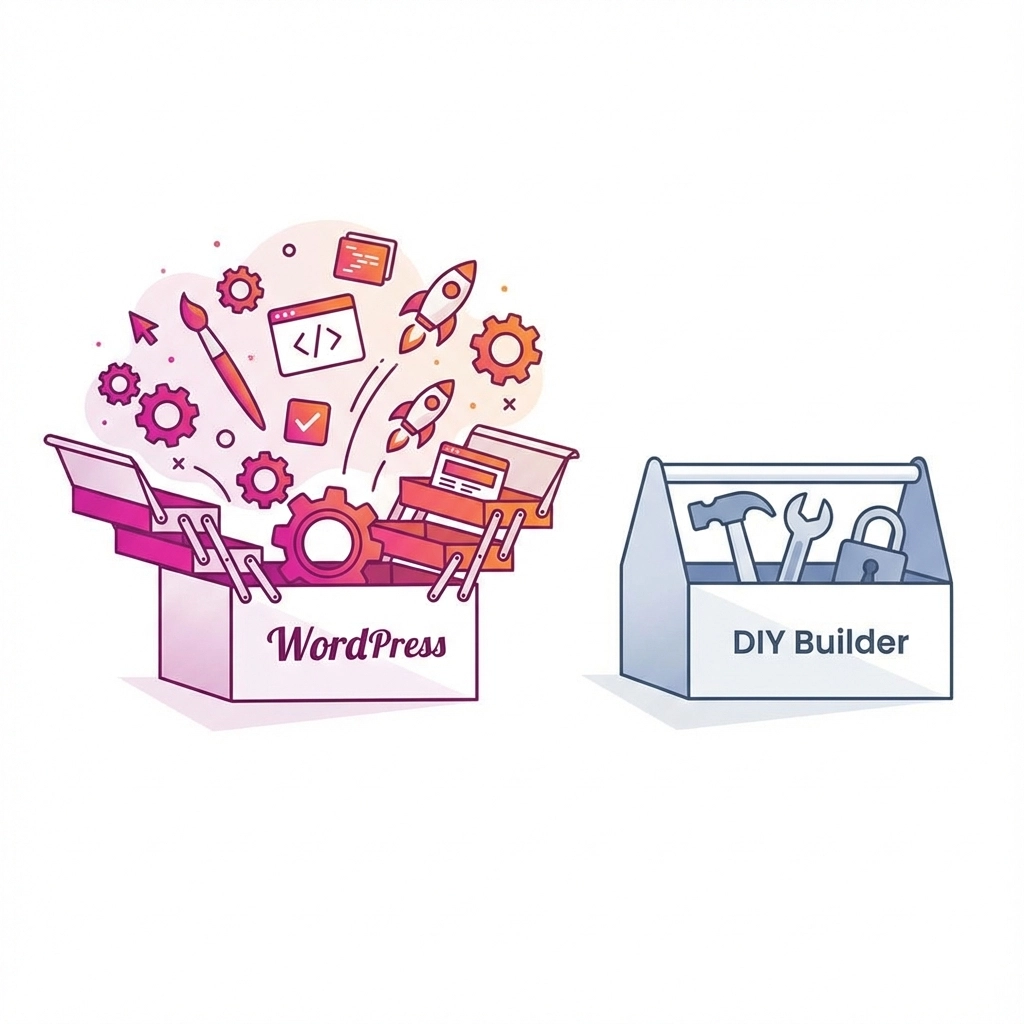
Here's why: WordPress loads only the code each page actually needs. DIY builders? They dump everything onto every page because they can't predict what features you might use. It's like carrying a full toolbox when you only need a screwdriver.
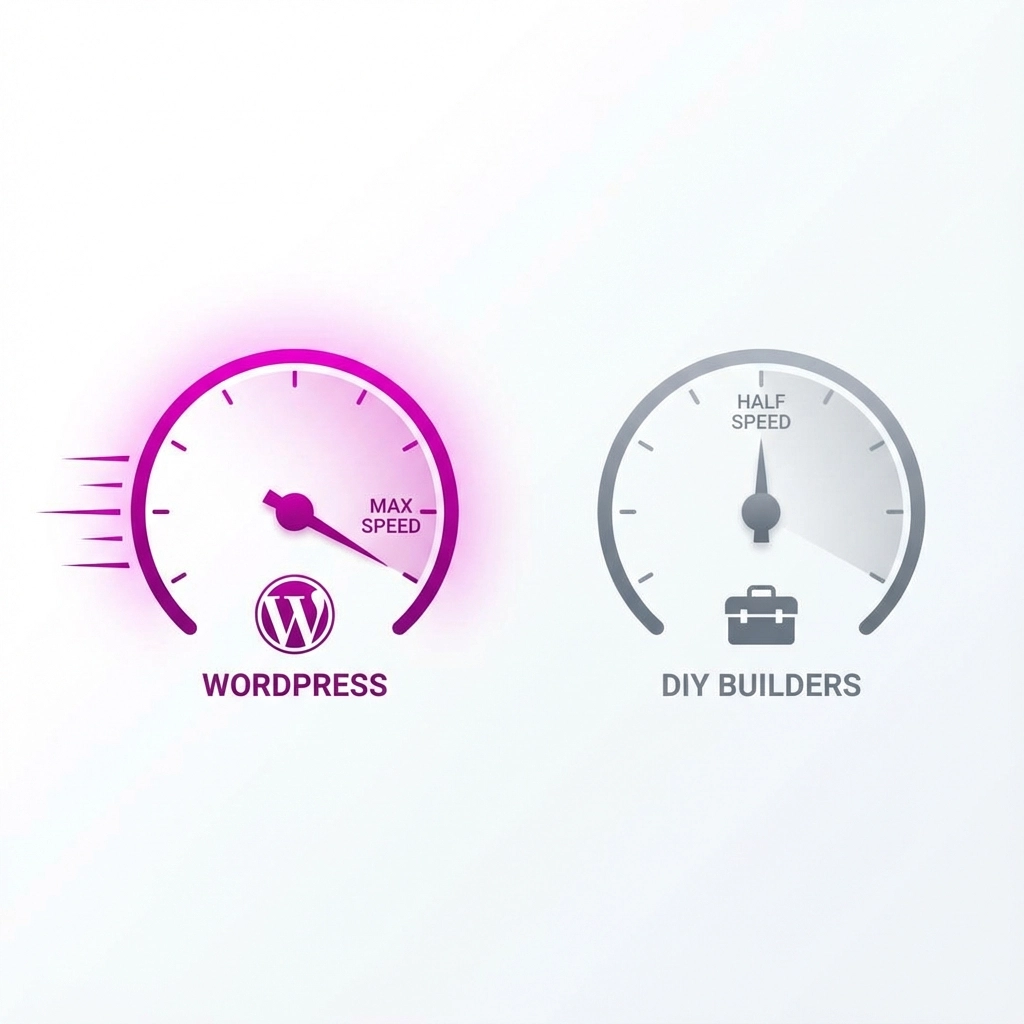
WordPress sites consistently hit 90-100 PageSpeed Insights scores when properly set up. Most DIY builders struggle to break 60. On mobile, where most of your local customers are searching, those extra seconds mean visitors bounce before they even see what you offer.
Customization That Actually Converts
WordPress gives you complete control over your customer journey. Need a custom booking system that integrates with your CRM? Easy. Want to add specific conversion elements based on where visitors come from? No problem.
DIY builders lock you into their vision of what a website should be. You can pick from their templates and maybe change colors, but you can't optimize for your specific business model or customer behavior.
Think about it: if you're a plumber, your conversion path is different from a dentist's. Your customers have different pain points, different decision-making processes. WordPress lets you build for those differences. Builders force everyone into the same generic funnel.
SEO That Actually Gets Found
More visibility means more conversion opportunities. WordPress gives you complete control over technical SEO, site structure, page speed, schema markup, advanced structured data. All the stuff that makes Google happy and gets you found by people ready to buy.
When businesses switch to optimized WordPress from builders, they typically gain 3-5 positions in local search results. That's not just vanity metrics, that's more qualified traffic hitting your site every single day.
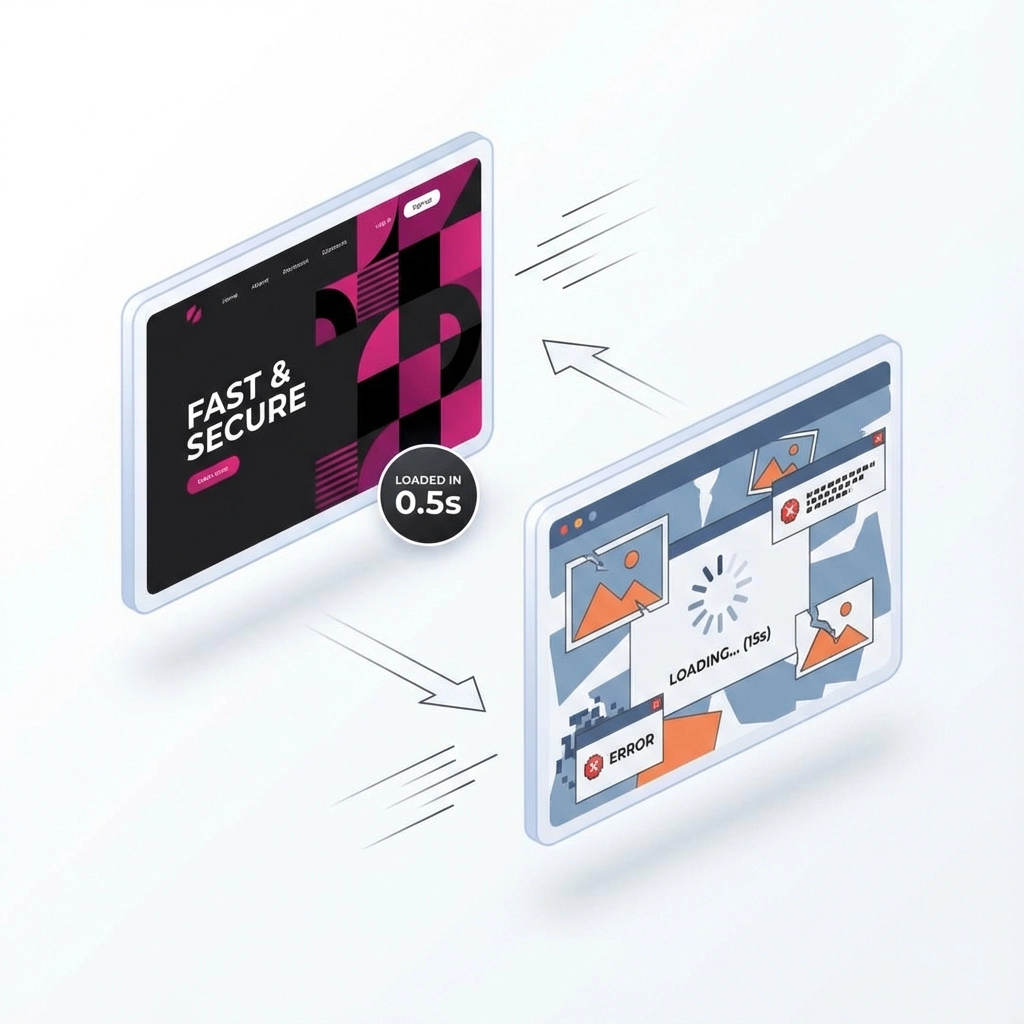
DIY builders give you basic SEO tools at best. You're playing with training wheels while your competitors are on racing bikes.
The Hidden Problems with DIY Builders
The Bait and Switch Pricing
Sure, those $5/month introductory rates look tempting. But here's what they don't tell you: those rates can increase up to 300% when renewal time hits. What started as cheap becomes expensive fast, and by then you're stuck in their ecosystem.
The total DIY route typically runs $15-300 per month anyway once you add the features you actually need. Meanwhile, a professional WordPress setup might cost more upfront but gives you ownership and control that pays dividends long-term.
Templates That Kill Conversions
Pre-built templates can't account for your specific business needs or customer journey. They're designed to look good in screenshots, not to convert your particular audience.
If your business evolves, and successful businesses always do, you're stuck. Want to add a new service? Hope their template supports it. Need custom functionality? Better hope they build it or find an expensive third-party workaround that never quite works right.
Platform Prison
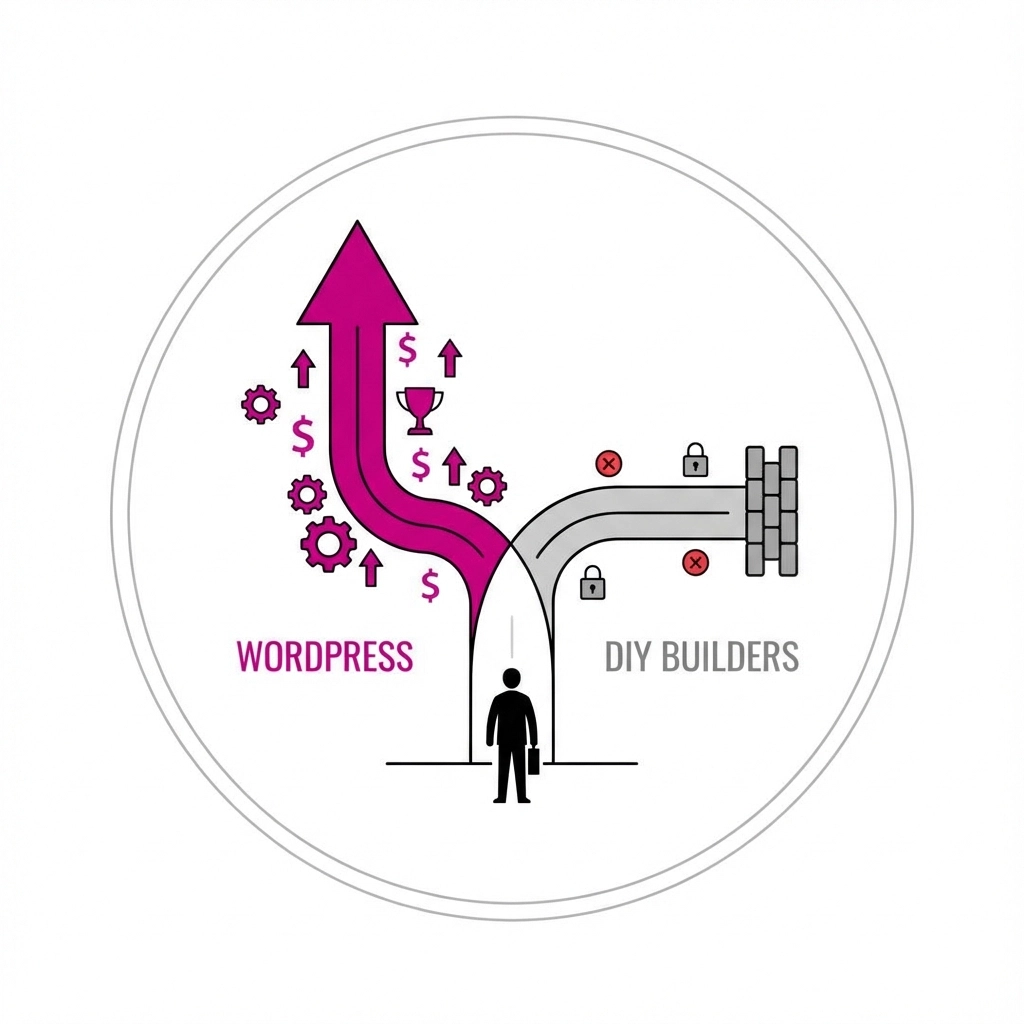
With DIY builders, you're renting space in someone else's house. They control the rules, the features, the pricing. If they decide to change directions or shut down features you depend on, you're stuck.
WordPress? You own your site. You can move it anywhere, modify anything, integrate whatever you need. That freedom isn't just philosophical, it's practical power that directly impacts your ability to optimize for conversions.
The Real Performance Numbers
Let's look at what actually matters for conversion:
Page Speed:
WordPress (optimized): 90-100 PageSpeed score
DIY Builders: 40-60 PageSpeed score
Conversion Impact:
Migrating to WordPress: 20-30% improvement from speed alone
Staying on builders: Watching visitors leave before they engage
Search Visibility:
WordPress: Full SEO control, 3-5 position gains typical
Builders: Basic tools, limited by platform restrictions
Customization:
WordPress: Complete flexibility via plugins and custom development
Builders: Restricted to whatever they decide to build
So Which One Should You Choose?
Go WordPress If:
You're serious about growing your business. You compete in any remotely competitive market. You need integration with CRM or other business tools. You want to avoid getting locked into someone else's platform.
Basically, if you treat your website as a business asset that should generate revenue, WordPress is the clear choice. The upfront investment pays for itself through better conversions and organic search performance.
Stick with DIY Builders If:
You're creating a temporary placeholder. You have zero budget and no growth plans. You don't care about search visibility or conversion optimization. You're okay with signaling "budget operation" to potential customers.
Honestly? These scenarios are rare for serious businesses. Even if you're just starting out, WordPress gives you room to grow without starting over.
The Bottom Line
Here's the harsh truth: cheap website builders create cheap-looking results. They're designed for quick, inexpensive sites with built-in limitations that prevent serious conversion optimization.
WordPress treats your website as what it should be, a conversion machine that turns visitors into customers. Yes, it requires more upfront investment. Yes, you might need professional help to get it right. But the businesses that choose WordPress consistently outperform those stuck on DIY platforms.
If you're ready to stop playing small with your online presence, WordPress is the foundation you need. Your future customers are searching for what you offer right now. The question is: will they find a professional, fast-loading, conversion-optimized site that builds trust and drives action?
Or will they find another generic template that looks like everyone else's?
The choice: and the results: are entirely up to you.

Ready to build a WordPress site that actually converts visitors into customers? Check out our WordPress website design services and see how we've helped other businesses turn their websites into lead-generating machines.
Comments