Social Proof & Success: How Your Social Presence Builds Trust Before the First Call

Here's the truth: your potential client is stalking you right now.
Before they ever pick up the phone, before they fill out your contact form, before they even think about booking that discovery call, they're scrolling. They're checking your Instagram. Reading your Google reviews. Clicking through your LinkedIn. Looking at who else you've worked with and what people are saying about you.
And in those first few minutes of digital detective work? They're making a decision about whether you're legit or not.
This is where social proof becomes your secret weapon. It's not about being everywhere or posting constantly. It's about creating a presence that quietly whispers (or maybe shouts), "Hey, real people trust this business. You can too."
Why Social Proof Matters More Than Your Pitch
You could have the smoothest sales pitch in the world. You could offer exactly what someone needs. But if your social presence feels empty, inconsistent, or questionable? They're moving on.
Social proof works because it taps into something deeply human: we look to others when we're uncertain. When someone's considering working with you, they're facing a risk. Will this work? Is this person credible? Am I making the right choice?

Seeing that others have already taken the leap: and succeeded: reduces that fear. It's the digital equivalent of walking into a restaurant. If it's packed with happy diners, you feel confident. If it's empty? You're suddenly questioning the menu.
Your social presence is that packed restaurant. It shows prospects they're not the first to trust you. And that changes everything.
The Types of Social Proof That Actually Build Trust
Not all social proof is created equal. Some types hit harder than others, especially before that first call happens.
Customer testimonials and reviews are the foundation. These are the voices of real people who've been where your prospect is right now. They answer the unspoken question: "Will this actually work for me?" When prospects see specific stories: not just "great service!" but actual details about challenges solved and results achieved: they start picturing themselves in that success story.
Case studies take it further. They're the full narrative: here's the problem someone faced, here's what we did together, here's what changed. For anyone making a significant decision, this context matters. It shows your process, your expertise, and your track record all at once.
Industry credentials and recognition work as instant credibility boosters. Awards, certifications, media features: these are trust seals that tell prospects, "Experts have vetted this business." They're particularly powerful if you're in a field where credibility is everything.

User-generated content is the modern gold standard. When real customers share their experiences organically: posting photos, tagging you, talking about results: that's authentic endorsement money can't buy. It's proof that people are excited enough about your work to tell others about it.
Where to Strategically Place Your Social Proof
Having great social proof doesn't help if nobody sees it. You need to think about placement like breadcrumbs leading prospects toward that first call.
Start with your website. Don't bury testimonials on some "Reviews" page nobody visits. Feature them prominently on your homepage, your services pages, anywhere a prospect might be evaluating whether to reach out. Real faces, real names, real stories.
Your social media profiles should showcase social proof consistently. Instagram highlights featuring client wins. LinkedIn recommendations visible on your profile. Facebook reviews people can easily find. These aren't just nice-to-haves: they're often the first place prospects look.
Email signatures are underrated real estate. A quick line mentioning how many businesses you've helped or a link to your latest case study keeps social proof front and center in every interaction.
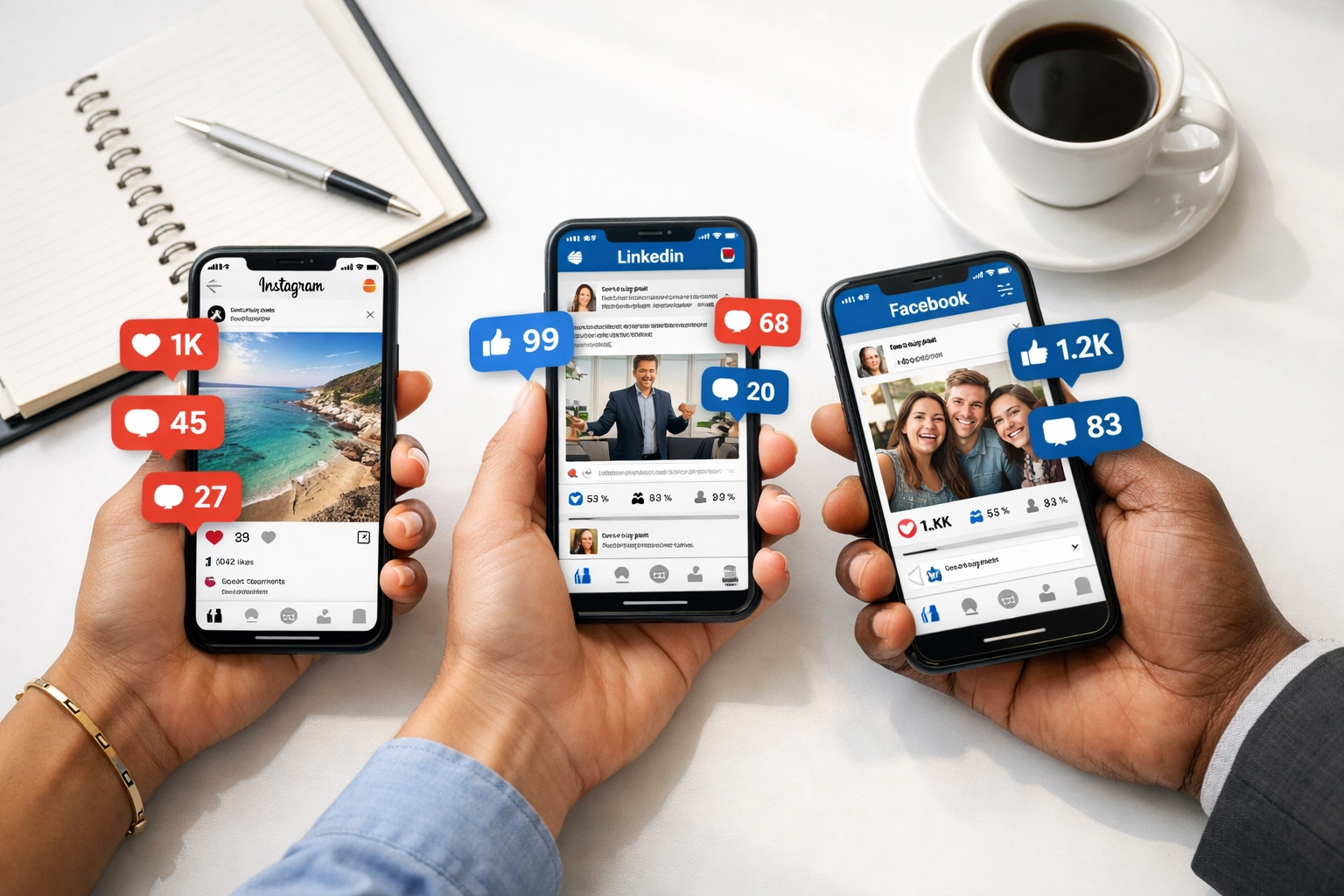
And don't forget about your ad campaigns. When you're running Facebook or Google ads, incorporating testimonials or success metrics immediately differentiates you from competitors. It's the difference between "We offer marketing services" and "Join the 200+ businesses who've transformed their lead generation with us."
Creating a Social Presence That Converts Before the Call
Building trust through social proof isn't about being perfect. It's about being authentic and consistent.
Start documenting client wins: with permission, of course. After a successful project, ask for a testimonial. Make it easy by asking specific questions: What problem were you trying to solve? What was your experience working together? What results did you see? Specific beats generic every time.
Encourage clients to leave reviews on Google, Facebook, or industry-specific platforms. Make it part of your wrap-up process. Send a friendly follow-up email with direct links. Most satisfied clients are happy to help: they just need the reminder and an easy path to do it.
Share behind-the-scenes content that humanizes your business. Team photos, work-in-progress shots, day-in-the-life posts. This stuff might feel less "professional" than polished marketing materials, but it builds connection. People trust people, not faceless brands.

Engage genuinely on social media. Respond to comments. Answer questions publicly. Show up in conversations related to your industry. This active presence signals that there's a real person behind the business: someone approachable and responsive.
The Numbers Don't Lie
Here's something that might surprise you: research shows that 69% of consumers are more likely to buy from a business if reviews describe positive experiences. That's more than two-thirds of potential clients making decisions based on what others say about you before they ever make contact.
Your social proof is doing sales work while you sleep. It's answering objections, building credibility, and warming up prospects so that by the time they reach out, they're already halfway sold.
Track what's working. Pay attention to which testimonials get the most engagement. Notice which case studies prospects mention when they contact you. Monitor your review ratings and how they correlate with inquiry volume. This data tells you what resonates.
Making It Work for Your Business
You don't need thousands of followers or hundreds of reviews to make social proof work. You just need authenticity and strategy.
Start small. If you only have a handful of happy clients, feature their stories prominently. Quality beats quantity. One detailed, compelling testimonial is worth more than ten generic "great work!" comments.
Be consistent. Your social presence doesn't need to be overwhelming, but it should be active. Regular posts, timely responses, updated information: these signals tell prospects you're engaged and current.
Diversify your proof. Don't rely on just one platform or one type of testimonial. Mix video testimonials with written reviews. Combine client stories with industry recognition. Layer different types of social proof so prospects encounter validation no matter where they look.

Most importantly, make it easy for prospects to find your social proof. Link your review profiles in your email signature. Feature testimonials on every service page. Create highlight reels on Instagram. Put case studies in your welcome email sequence.
The Trust Factor
At the end of the day, social proof is about one thing: trust. It's the bridge between "I'm interested" and "I'm ready to talk."
Your potential clients are doing their homework before they ever reach out. They're looking for reasons to trust you: or reasons to keep scrolling. Your social presence either builds that trust or creates doubt.
The good news? You have more control over this than you might think. Every review you request, every client story you share, every bit of recognition you highlight: it all adds up. It creates a digital presence that does the heavy lifting before you ever have a conversation.
So while you're optimizing your website and perfecting your pitch, don't forget about the social proof working behind the scenes. It might just be the thing that tips the scale and gets that phone ringing.
Because trust isn't built in a sales call. It's built in all the moments leading up to it. And your social presence? That's where trust begins.
Comments