"Hey Siri, Find My Business": How Voice Search is Changing SEO for Small Brands

Picture this: Someone's driving through your neighborhood, craving exactly what you sell. They tap their phone and say, "Hey Siri, find coffee shops near me." Three seconds later, they're heading to your competitor down the street.
Why? Because your competitor's business popped up first in the voice search results. And you didn't.
Voice search isn't some futuristic concept anymore. It's happening right now, and it's completely changing how people find small businesses like yours. If you're still optimizing your SEO like it's 2015, you're missing out on customers who are literally asking their phones to find you.
Let's talk about how to fix that.
Why Voice Search is Different (And Why You Should Care)
Here's the thing about voice search: people don't talk to their phones the way they type into Google. When you're typing, you might search for "pizza Brooklyn." But when you're talking? You ask, "Where's the best pizza place near me that's open now?"
See the difference? Voice searches are longer, more conversational, and usually location-based. And for small businesses, that's actually great news.
More than half of consumers have used voice search to find local businesses. Even better? When someone uses voice search to find a local business, there's a 76% chance they'll visit that business the same day. That's not just traffic, that's ready-to-buy customers showing up at your door.

The Single Answer Problem
Here's where voice search gets tricky. When someone types a search into Google, they get a whole page of results. But when they ask Siri or Alexa? They get one answer. Maybe two if they're lucky.
That means you're not just competing to be on the first page anymore. You're competing to be the only answer that gets spoken out loud. No pressure, right?
Voice assistants usually pull their answers from what's called "featured snippets", those boxes that appear at the top of Google search results. If you want voice search traffic, getting your content into that position zero spot is basically the whole game.
How to Actually Optimize for Voice Search
Okay, enough theory. Let's get into what you actually need to do to show up in voice searches.
Talk Like Your Customers Talk
Stop thinking in keywords. Start thinking in questions. Your customers aren't searching for "plumber Chicago": they're asking "who's the best emergency plumber near me?"
Go through your website and add sections that answer real questions your customers ask. Create an FAQ page. Write blog posts that directly answer common questions. Use the exact phrases people actually say.
Think about the last five questions a customer asked you. Those should be on your website, word for word, with clear answers right underneath.

Get Your Google Business Profile Together
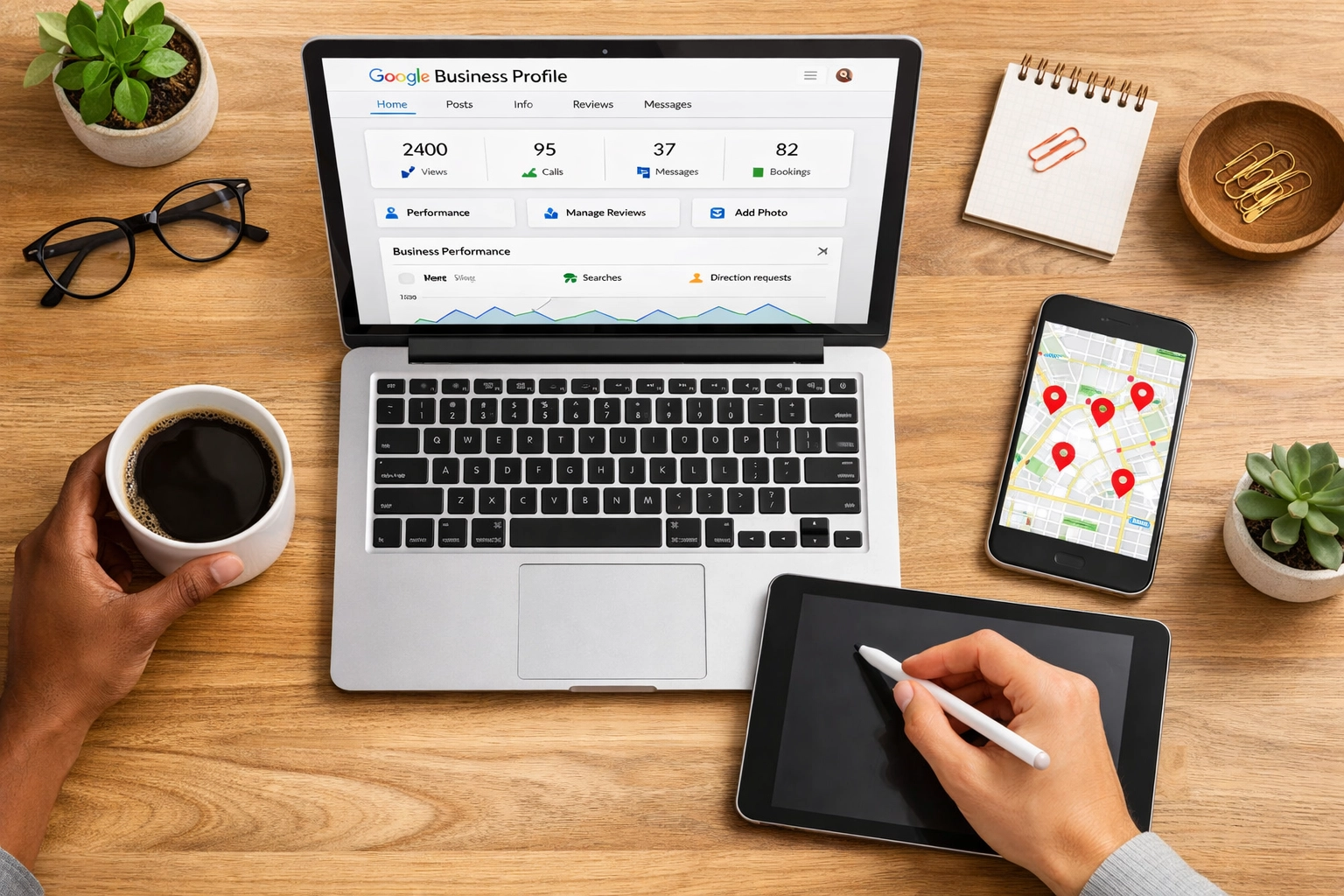
If you have a physical location or serve a specific area, your Google Business Profile is the most important thing you'll touch this year. I'm serious.
Voice assistants love pulling information straight from Google Business Profiles for local searches. If yours is incomplete or outdated, you're basically invisible to voice search.
Here's what needs to be perfect:
Your business name, address, and phone number (and they better match everywhere online)
Your hours, updated religiously
Your business category (choose the most specific one that fits)
High-quality photos of your business, team, and products
All the attributes Google lets you add for your business type
And reviews? Get them. Respond to them. Voice assistants pay attention to businesses with good review profiles.
Create Content That Answers Questions
Remember how voice assistants love featured snippets? Here's how you get into those.
Write content in a question-and-answer format. Use headers that are literally the questions people ask. Then answer them clearly and concisely in the next paragraph: ideally in 40-60 words.
Lists work great too. Bullet points. Step-by-step instructions. Anything that's easy for Google to pull out and read as a standalone answer.
Don't bury your best information at the bottom of long paragraphs. Put the answer right up front, then elaborate if you need to.
Speed Matters More Than Ever
Voice search users are usually on their phones, often while driving or walking or doing something else. They want answers immediately. If your website takes five seconds to load, you're out of the running.
Make sure your site loads fast on mobile. Compress your images. Clean up your code. Use a decent hosting provider. All that technical SEO stuff you've been putting off? This is why it matters.
Think Mobile-First Everything
Since most voice searches happen on mobile devices, your website absolutely needs to work perfectly on phones. Not "okay" on phones. Perfectly.
That means text that's readable without zooming. Buttons that are easy to tap. Pages that load quickly on cellular data. Navigation that makes sense on a small screen.
If you're not sure how your site looks on mobile, pull out your phone right now and check. Better yet, ask someone who's never seen your website to try finding your hours or contact info. If they struggle, you've got work to do.
Local SEO is Voice Search SEO
For small businesses, voice search optimization and local SEO are basically the same thing. Most voice searches have local intent: people are looking for businesses near them, right now.
That means you need to focus on:
Local keywords with conversational phrases. Instead of "dentist," think "family dentist near me who takes new patients."
Location pages if you serve multiple areas. Each one should have unique content about serving that specific community.
Local citations and listings. Get your business listed consistently across directories, review sites, and local platforms.
Local content. Write about local events, news, or topics relevant to your community. This helps search engines understand where you are and who you serve.

The Authority Advantage
Here's something cool about voice search: when a voice assistant chooses your content as the answer, you're getting a serious credibility boost. You're not just one result among many: you're the answer that an AI deemed trustworthy enough to speak out loud.
That builds brand recognition fast. People remember the business name they heard Alexa recommend. They trust it more because it came from a source they already trust.
For small brands competing against bigger companies with bigger budgets, this levels the playing field. Being the single spoken result is better than being third on a list of ten competitors.
Start Small, But Start Now
Look, you don't have to overhaul your entire digital presence overnight. But you do need to start somewhere.
Pick three questions your customers ask all the time. Add those questions and clear answers to your website this week. Update your Google Business Profile so everything's current and complete. Check that your site works well on mobile.
Those three things alone will put you ahead of most small businesses when it comes to voice search.
Voice search isn't replacing traditional search: it's just adding another layer. But it's a layer that's growing fast, and the businesses that adapt early are the ones who'll benefit most.
Your customers are already talking to their phones. Make sure they're talking about you.
If you need help getting your SEO strategy ready for voice search, check out our services or reach out to us. We're here to help small brands show up exactly where their customers are looking: or asking.
Comments