
AI Marketing Tools vs. Human Strategy: Which Is Better For Your Small Business?
- Shalena Ward

- Dec 20, 2025
- 5 min read
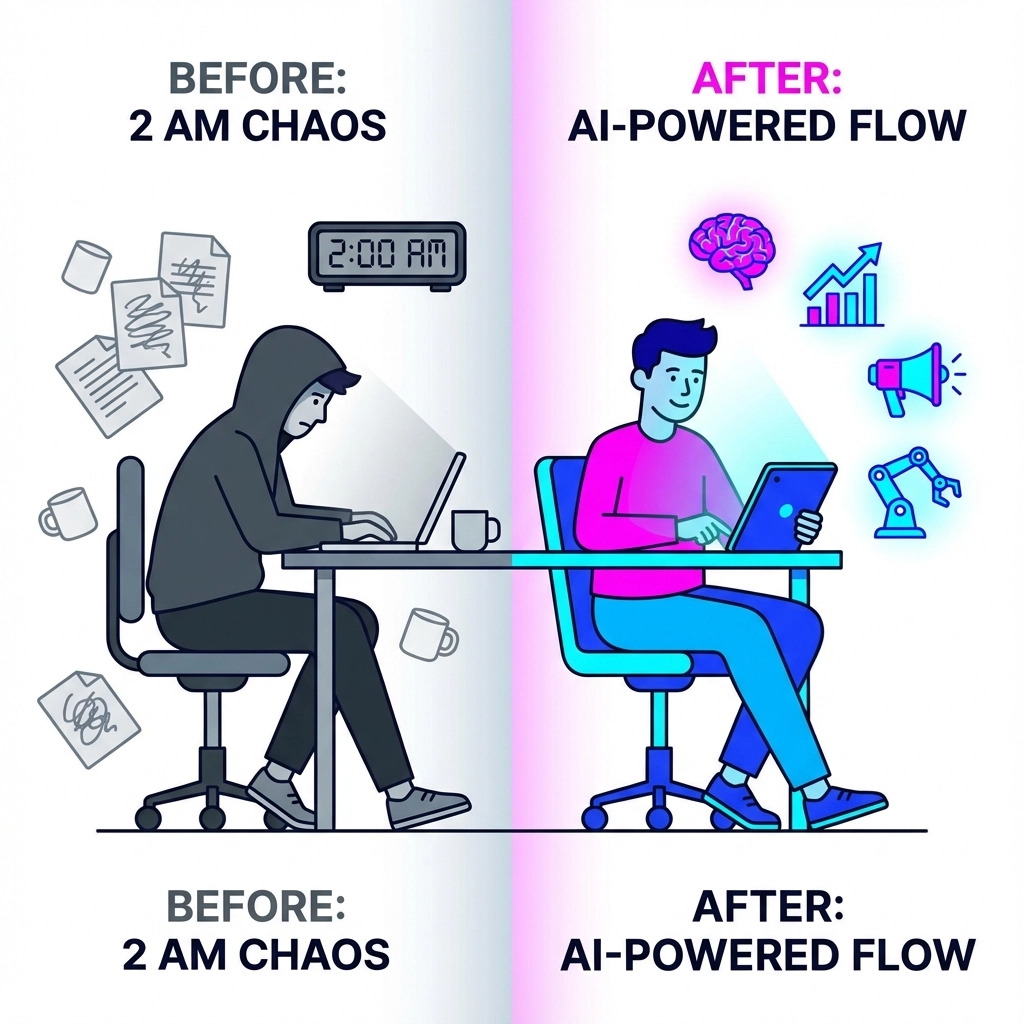
Picture this: It's 2 AM, and you're staring at your laptop screen, trying to write another social media post for tomorrow. Your eyes are burning, your coffee's gone cold, and you're wondering if there's a better way to handle your marketing without hiring a full-time team you can't afford.
Sound familiar? You're definitely not alone.
The good news? You've got more options than ever before. The not-so-good news? Choosing between AI marketing tools and human strategy feels like picking between your left and right arm. But here's the thing – you don't actually have to choose.
Why AI Marketing Tools Are Changing the Game
Let's be honest – AI marketing tools aren't just fancy tech anymore. They're becoming essential for small businesses that want to compete without burning out their teams or their budgets.
The Numbers Don't Lie
Here's what caught my attention: 97% of small businesses using AI say these tools cut down their marketing time significantly. Even better? 95% report they don't need to hire as many people, and 92% see their costs drop. That's not just impressive – that's game-changing for small business owners who wear fifteen different hats every day.
What AI Actually Does Well
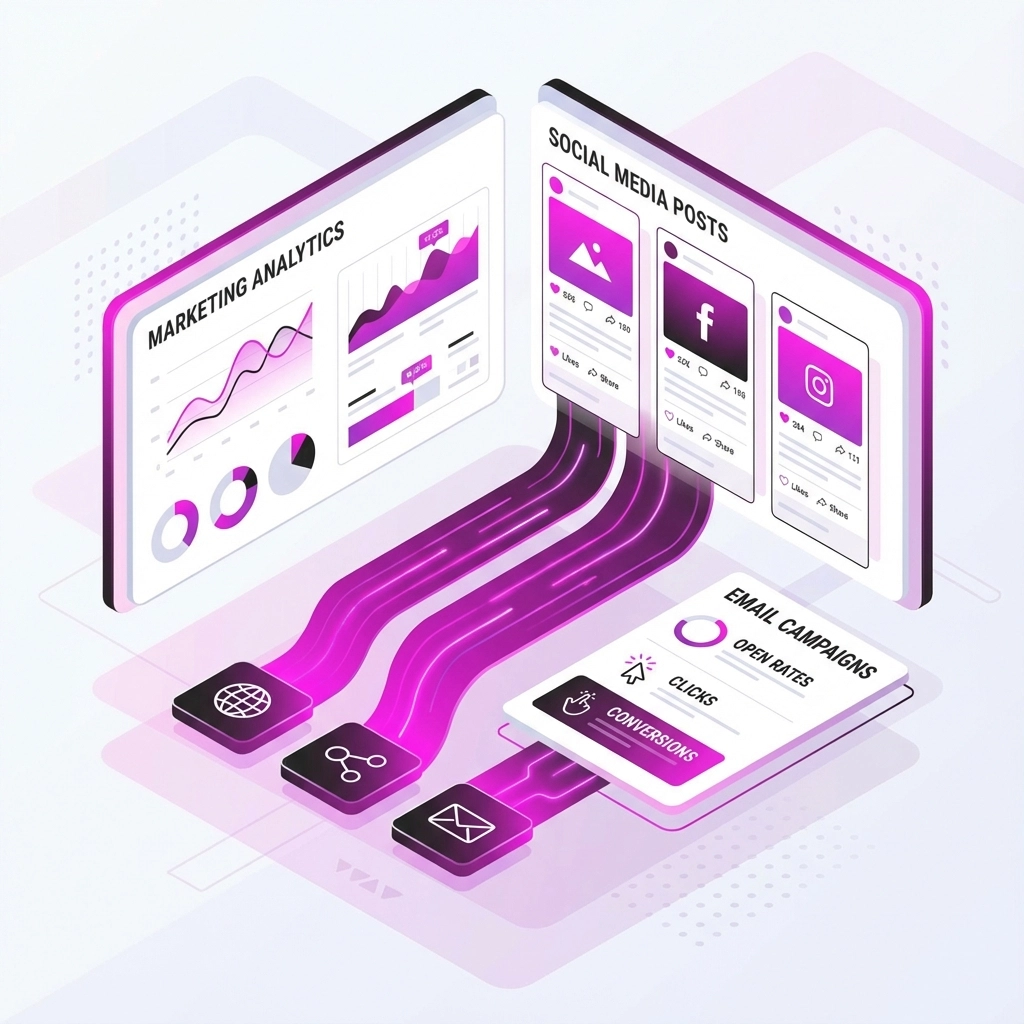
AI marketing tools excel at the stuff that usually makes you want to pull your hair out. They can whip up social media posts, email campaigns, and even ad variations in minutes instead of hours. Platforms like Adcreative.ai can generate different ad formats – display ads, social media graphics, video content – all while you're grabbing lunch.
But here's where it gets really interesting: these tools don't just create content and call it a day. They're constantly learning and optimizing. Your click-through rates low? The AI adjusts headlines automatically. Engagement dropping on social media? It tweaks posting times and content styles without you lifting a finger.
One small business owner I read about saw their click-through rates double after switching to AI-generated ad designs. And most businesses start seeing real results within their first month of using these tools.
The Cost Reality Check
Most small businesses using AI marketing tools spend less than $1,000 annually on marketing – that's just 32% of AI users compared to only 12% of businesses not using AI. When you break that down monthly, you're looking at tools ranging from $29 to maybe $890 per month, depending on what you need.
Compare that to hiring even a part-time marketing person, and the math starts making sense pretty quickly.
Where Human Strategy Still Wins
Now, before you think I'm about to tell you to fire your marketing team and let robots take over, hold up. There are some things humans do that AI just can't touch.
The Creative Spark
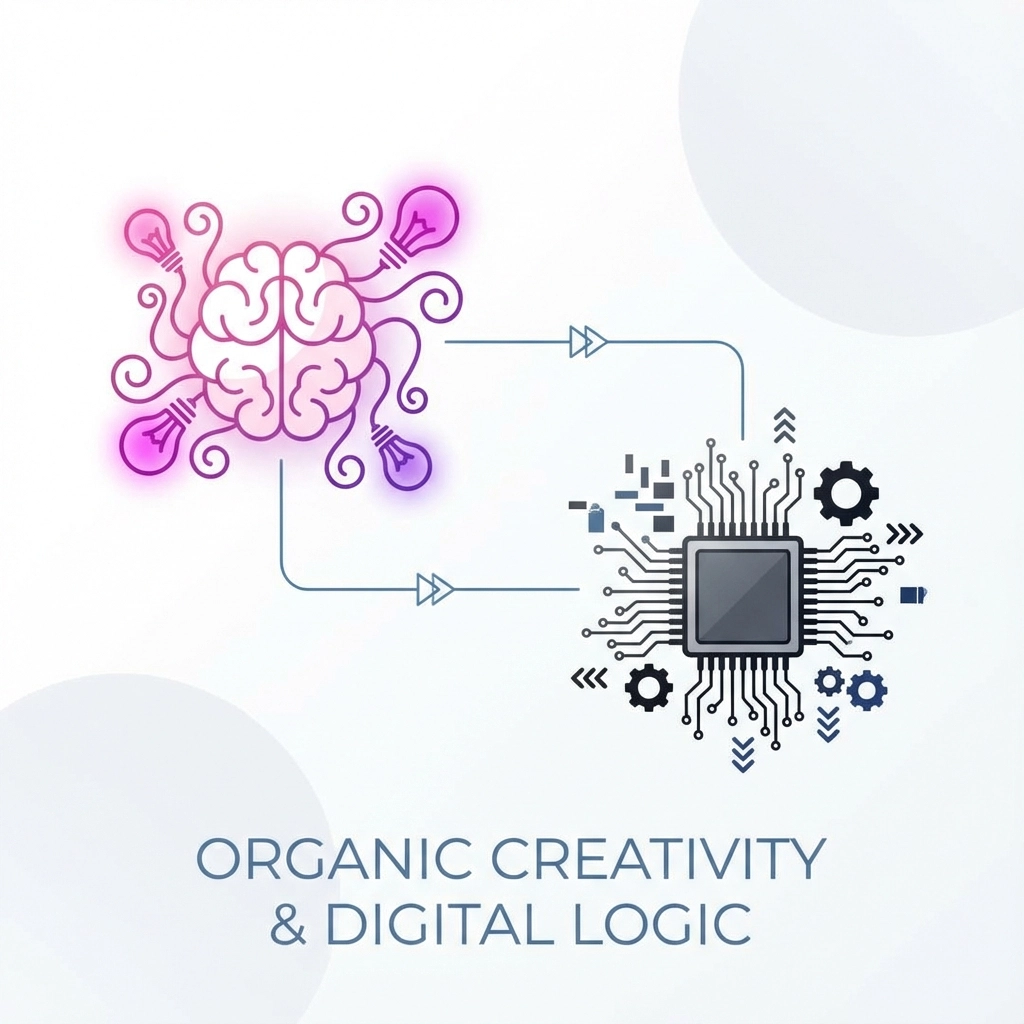
AI can optimize the heck out of your existing ideas, but it's not great at coming up with completely new ones. When you need that "aha!" moment – that unique angle that sets your business apart from every other company in your space – that's where human creativity shines.
Your marketing team (or even just you, if you're a one-person show) brings intuition, emotional intelligence, and the ability to read between the lines of market trends. AI sees patterns in data. Humans see opportunities that don't exist in spreadsheets yet.
Understanding Your Why
AI doesn't know why you started your business at 3 AM in your garage, or what keeps you up at night worrying about your customers. It doesn't understand the mission behind your brand or the values that drive every decision you make.
Human strategists get this. They can make sure your marketing doesn't just convert well – it feels authentically you. They ensure your brand voice stays consistent across every channel, and they can pivot when something just doesn't feel right, even if the data says it should work.
Complex Problem Solving
When your marketing hits a wall that doesn't fit any template or pattern, humans excel at creative problem-solving. They can diagnose issues that go deeper than click-through rates and engagement metrics. Sometimes, the problem isn't your ad copy – it's your entire positioning in the market.
The Smart Money Move: Blending Both Approaches
Here's what I've learned from watching successful small businesses: the ones crushing it aren't choosing between AI and human strategy. They're using both strategically.
If You're Just Starting Out or On a Tight Budget
Start with AI tools for the heavy lifting – social media scheduling, email marketing, basic ad creation. Use your human brain power for the big-picture stuff: defining your target audience, setting quarterly goals, analyzing what your competitors are doing differently.
This approach lets you automate the time-consuming tasks while focusing your limited resources on strategic thinking that actually moves the needle.
If You're Ready to Scale
Invest in human strategy guidance (even if it's just a consultant for a few hours monthly) while letting AI handle daily execution. This gives you the best of both worlds – creative direction and market intelligence from humans, combined with the efficiency and consistency of AI automation.
Studies show that 89% of businesses using AI tools believe they'll be crucial for success over the next year. But the businesses seeing the biggest wins are the ones combining AI execution with human strategic oversight.
If You're Established and Growing
Use AI to handle your operational marketing workload – content creation, social media management, email sequences, and performance optimization. Then redeploy your human resources to higher-level work: customer research, competitive analysis, partnership development, and long-term brand evolution.
This prevents burnout while leveraging your team's experience where it matters most.
Making It Work in the Real World
Here's your action plan: track three key metrics to measure how well your AI-human combo is working.
First, measure the time you're saving on marketing tasks. If you're not getting hours back in your week, something's not working.
Second, watch your engagement metrics – likes, comments, email open rates, website visits. These should improve as AI optimizes your content and humans guide your strategy.
Third, track the business results that actually matter – sales, leads, customer acquisition costs. Most businesses see measurable improvements within their first month of combining AI tools with human strategy.
The Bottom Line
The businesses winning in 2025 aren't the ones with the fanciest AI tools or the biggest marketing teams. They're the ones using AI to execute better human strategy.
AI handles the repetitive, data-heavy tasks that used to eat up your time and budget. Humans provide the creative thinking, strategic direction, and brand understanding that turns marketing from a cost center into a growth engine.
You don't have to choose sides in this battle. The smartest move? Let AI do what it does best, while you focus on what only humans can do. Your future self (and your bank account) will thank you.
Ready to stop choosing between AI and human strategy and start using both? Check out our approach to see how we're helping small businesses blend the best of both worlds without the complexity or the crazy costs.
Comments