
Stop Chasing Vanity Metrics: The Simple Marketing Strategy Framework That Actually Grows Revenue (Not Just Followers)
- Shalena Ward

- Jan 3
- 5 min read
You're staring at your Instagram analytics again, aren't you? 10,000 followers, solid engagement rates, and posts that get decent likes. But here's the thing that's keeping you up at night – your bank account doesn't reflect those numbers. At all.
If this hits a little too close to home, you're not alone. We're living in 2026, and small business owners are still getting caught in the vanity metrics trap. But here's what I've learned after helping dozens of businesses flip the script: followers don't pay bills. Revenue does.
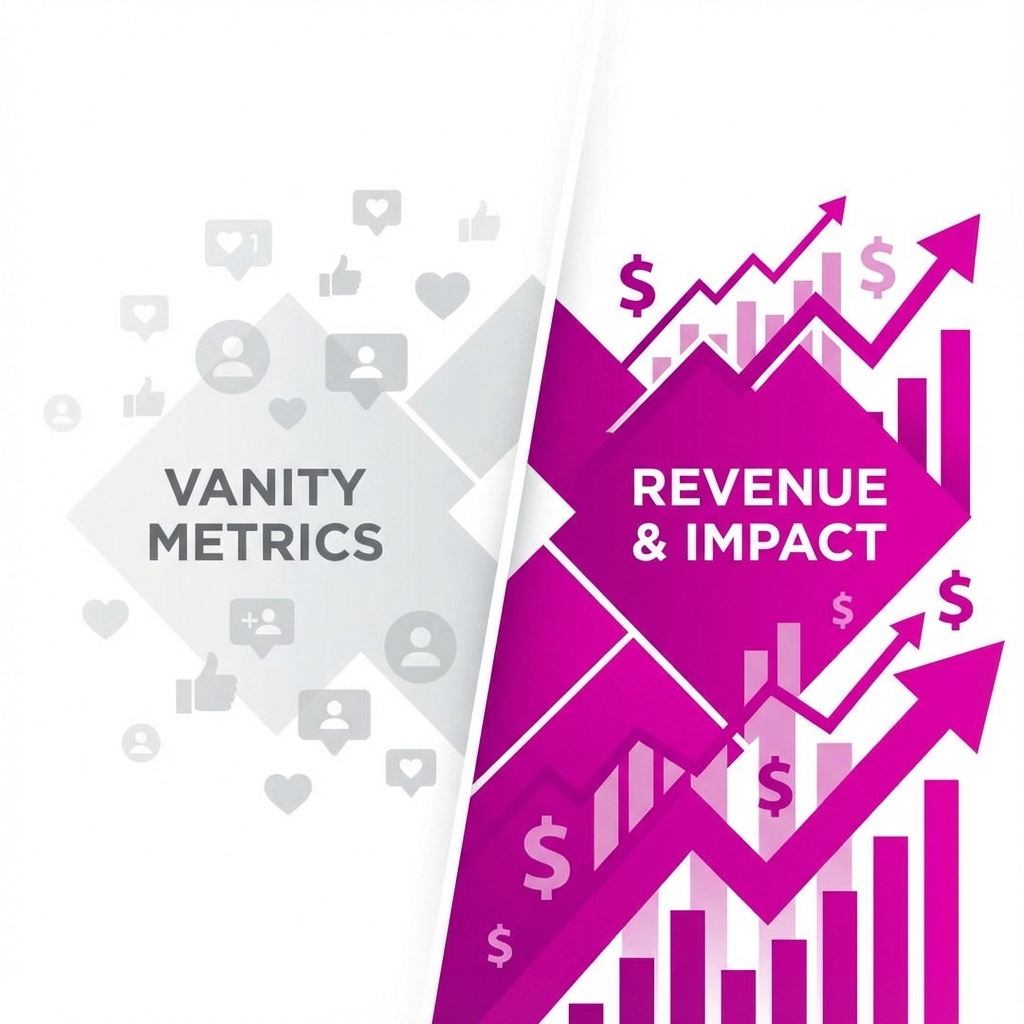
The Vanity Metrics Problem That's Killing Your Business
Let's be real about what's happening here. You've been sold this idea that more followers equals more success. So you've spent months (maybe years) obsessing over:
How many people follow you
Likes and comments on your posts
Website traffic numbers
Email open rates
Brand awareness metrics
Meanwhile, your actual revenue? It's staying flat or growing at a snail's pace. Sound familiar?
Here's the brutal truth: 84% of marketers feel pressured to prove their marketing spend's worth, but 61% of marketing leaders can't make ROI-based decisions because they don't trust their data. We're chasing the wrong numbers entirely.

Think about it this way – would you rather have 1,000 engaged followers who buy from you regularly, or 50,000 followers who never spend a dime? The answer's obvious, but somehow we keep getting distracted by the bigger numbers.
What Actually Drives Revenue (Hint: It's Not Your Follower Count)
Your marketing strategy for small business needs to focus on one thing: predictable lead flow that converts into paying customers. That's it. Everything else is just noise.
Companies that align their sales and marketing teams see revenue grow 2.4 times faster and earn twice the profits compared to those stuck in the vanity metrics game. So what are they doing differently?
They're tracking metrics that actually matter:
Pipeline velocity (how fast prospects move through your sales process)
Win rates (percentage of qualified leads that become customers)
Average deal size
Customer lifetime value
Revenue contribution by marketing channel
See the difference? These numbers tell you exactly how your marketing efforts translate into real money.
The Simple Framework That Actually Works
Here's the marketing strategy framework that's been working for businesses just like yours in 2026. No fluff, no complicated systems – just three core components that drive real results.
Component 1: Revenue-First Metrics
Stop measuring everything and start measuring what counts. Your lead generation strategies should be built around these key performance indicators:
Lead Quality Score: Not all leads are created equal. A lead who downloads your free guide but never engages again isn't worth the same as someone who books a consultation call. Track which marketing channels bring you leads that actually convert.
Pipeline Velocity: How long does it take for a qualified lead to become a paying customer? If your sales cycle is getting longer, that's a red flag that needs immediate attention.
Customer Acquisition Cost (CAC): How much are you spending to acquire each new customer? If your CAC is higher than your customer lifetime value, you're hemorrhaging money.
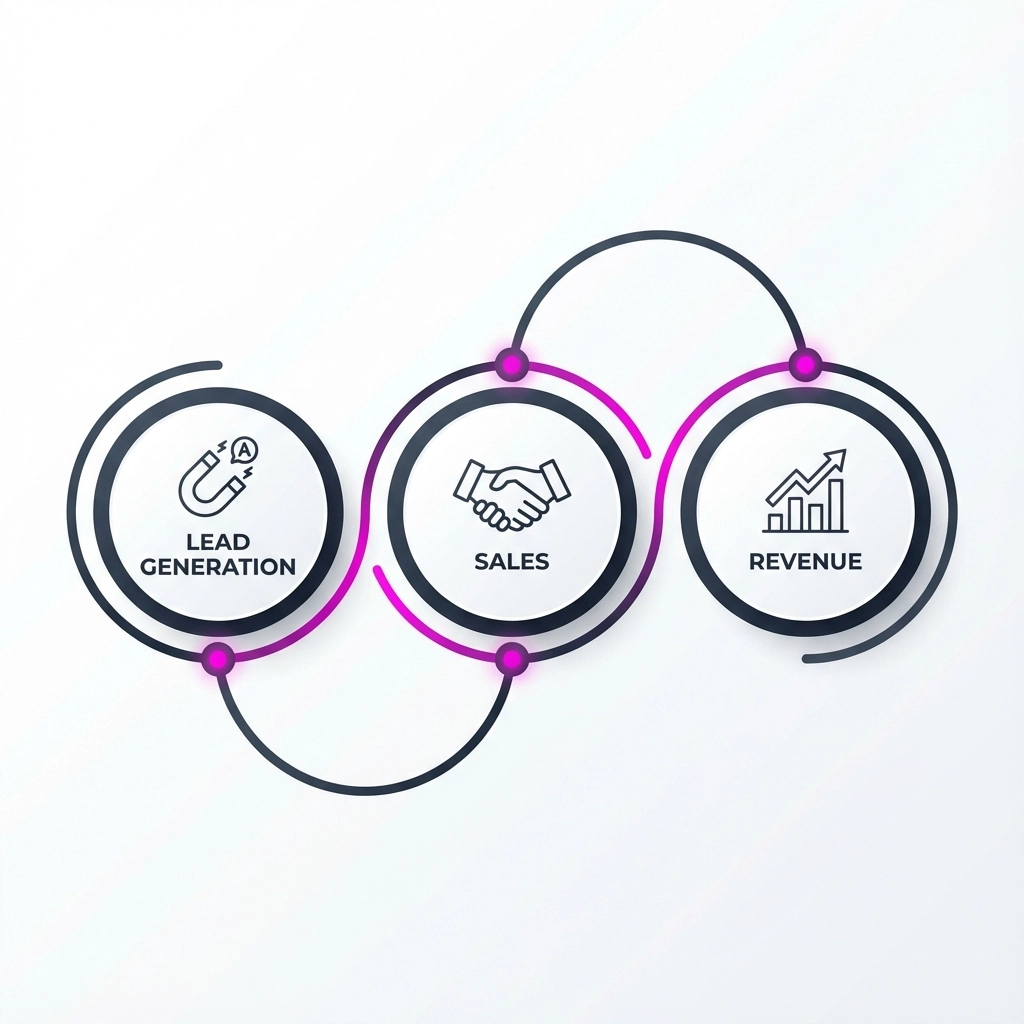
Component 2: Closed-Loop Feedback System
This is where most small businesses drop the ball. You generate leads through marketing, hand them off to sales, and then... radio silence. You never know what happened to those leads or why they didn't convert.
Revenue marketing builds a continuous feedback loop. When a lead doesn't convert, your sales team tells marketing why. When a lead becomes a high-value customer, marketing knows which channels to double down on.
Here's how to set this up:
Weekly sales and marketing alignment meetings
Shared CRM dashboard with real-time lead status updates
Monthly analysis of which marketing channels produce the highest-value customers
Component 3: Customer Journey Optimization
Your prospects don't just wake up ready to buy. They go through a journey – from awareness to consideration to decision. Your affordable marketing services need to support them at every stage.
Map out your customer journey:
Awareness: Educational content that solves real problems
Consideration: Case studies and social proof that build trust
Decision: Clear calls-to-action and streamlined purchase process
Retention: Follow-up campaigns that turn one-time buyers into repeat customers
Implementation: Your 90-Day Action Plan
Ready to ditch the vanity metrics and start building a predictable lead flow? Here's your step-by-step roadmap.
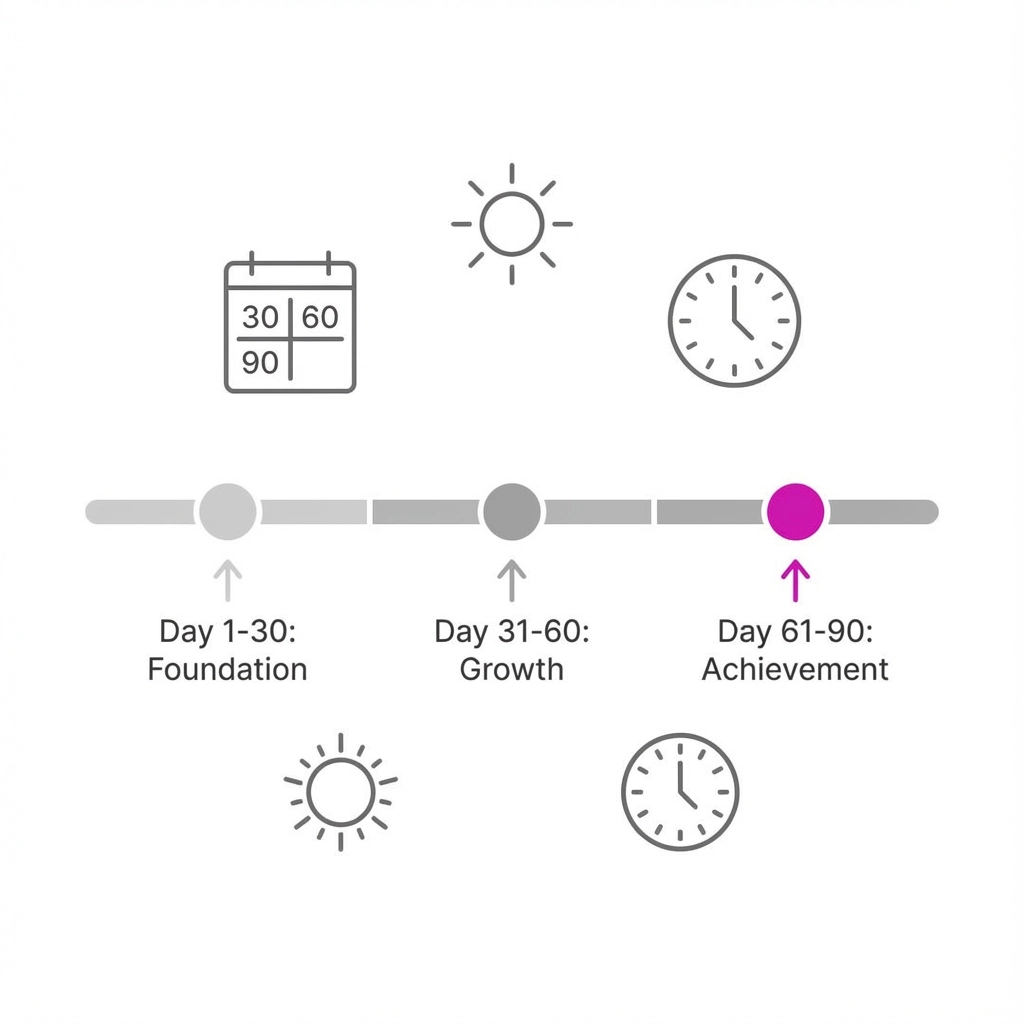
Days 1-30: Foundation Setting
Start by auditing your current metrics. Which numbers are you tracking right now? Be honest – how many of them directly correlate to revenue?
Set up your revenue-first tracking system:
Define what a "qualified lead" means for your business
Calculate your current customer acquisition cost
Establish baseline metrics for pipeline velocity
Most importantly, get your sales and marketing teams talking. If you're a solopreneur, this means tracking which marketing activities lead to actual sales conversations.
Days 31-60: System Implementation
This is where you start seeing the magic happen. Implement your closed-loop feedback system:
Set up weekly check-ins between sales and marketing
Create shared dashboards that everyone can access
Start tracking lead quality scores for each marketing channel
Focus on one marketing channel at a time. Don't try to optimize everything simultaneously – you'll burn out and get mediocre results across the board.
Days 61-90: Optimization and Scaling
By now, you should have enough data to see patterns. Which marketing channels are bringing you the highest-quality leads? Which parts of your customer journey have the biggest drop-off rates?
This is when you start making data-driven decisions about where to invest your marketing budget. Instead of spreading resources across every social media platform, you can confidently invest in the channels that actually drive revenue.
The Results You Can Expect
Here's what happens when you stop chasing vanity metrics and start focusing on revenue:
Companies that arrange their sales and marketing teams effectively report 208% more revenue from marketing efforts. That's not a typo – aligned teams literally double their marketing ROI.
But the benefits go beyond just numbers. You'll finally have clarity about what's working and what isn't. No more wondering if your marketing spend is justified. No more sleepless nights worrying about whether your business is actually growing.
Your digital marketing agency partnership becomes more strategic too. Instead of asking for "more followers" or "higher engagement," you can have conversations about pipeline velocity and customer lifetime value.
Why 2026 is the Perfect Time to Make This Shift
The digital marketing landscape has matured. Consumers are more sophisticated, and they can smell inauthentic marketing from a mile away. The businesses winning in 2026 are the ones focused on delivering real value and building genuine relationships.
Plus, the tools available now make revenue-focused marketing easier than ever. CRM systems integrate seamlessly with marketing platforms. Analytics tools can track the entire customer journey. Automation helps you nurture leads without losing that personal touch.
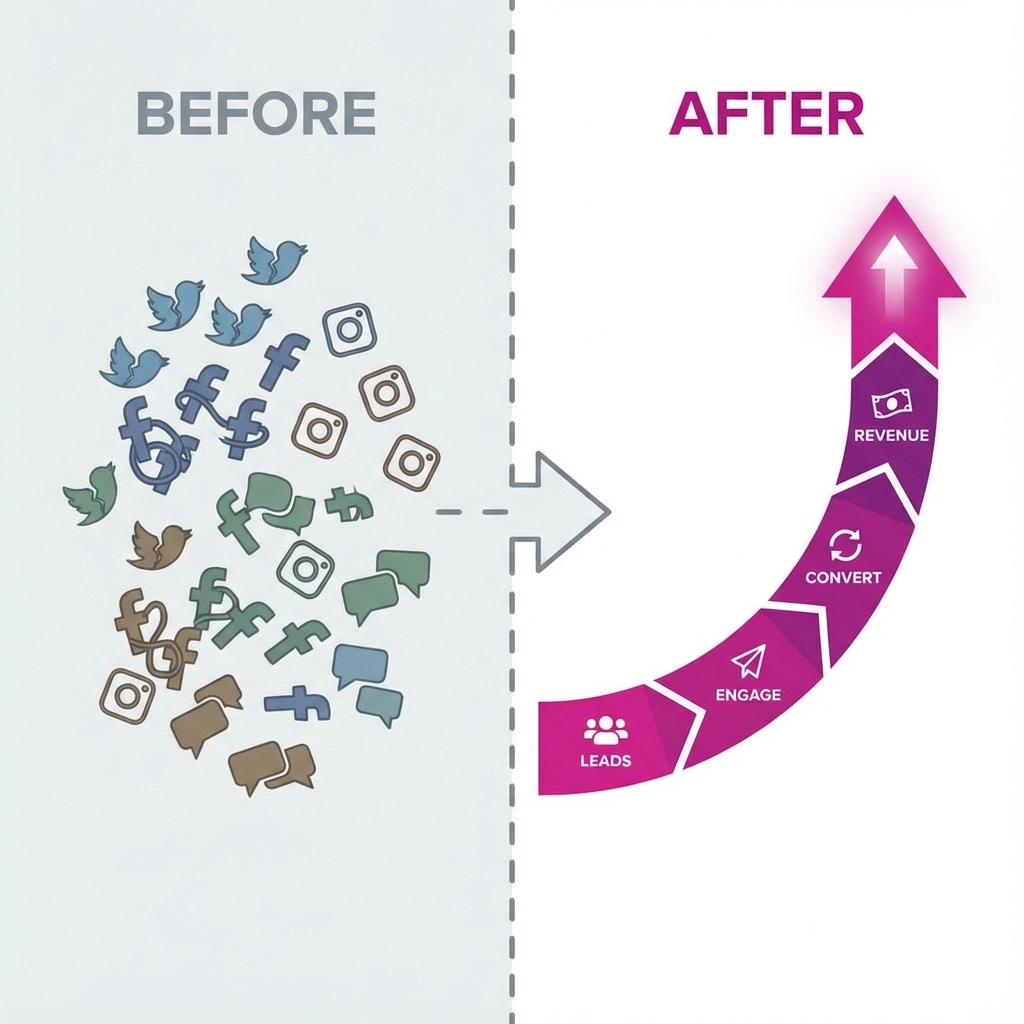
The businesses still chasing follower counts and engagement rates? They're going to get left behind. The ones building systems around revenue metrics? They're setting themselves up for sustainable, long-term growth.
Your Next Steps Start Now
Look, I know this feels like a big shift. You've probably been focused on vanity metrics for months or years. But here's the thing – every day you wait is another day your competitors are building more predictable, revenue-focused marketing systems.
Start small. Pick one revenue metric to focus on this week. Set up one feedback loop between your marketing and sales efforts. Take one marketing channel and analyze it through the lens of actual revenue generation.
The framework is simple, but it works. And in a world where every small business is fighting for attention, the ones with clear, revenue-focused strategies are the ones that survive and thrive.
Your followers might not pay the bills, but your customers do. Isn't it time to start optimizing for what actually matters?
Ready to build a marketing system that actually drives revenue? Check out our proven marketing strategies that have helped dozens of small businesses create predictable lead flow and sustainable growth.
Comments