
The Proven Marketing Strategy Framework for Busy Entrepreneurs (No Guesswork Required)
- Shalena Ward

- Dec 11, 2025
- 5 min read
Let's be honest, you're juggling a million things as an entrepreneur. Between managing your team, handling customer issues, and keeping the lights on, marketing often feels like this mysterious black box that eats your budget without delivering clear results.
Sound familiar? You've probably tried random tactics here and there. Maybe you threw some money at Facebook ads, posted sporadically on social media, or hired someone who promised the world but delivered crickets. Another month passes, and you're still wondering why your phone isn't ringing with qualified leads.
Here's the thing: you don't need more marketing tactics. You need a framework that eliminates the guesswork and gives you predictable results. Today, I'm excited to share the exact system that transforms scattered marketing efforts into a lead-generating machine.
Why Most Entrepreneurs Fail at Marketing (And It's Not Your Fault)
The biggest mistake I see busy entrepreneurs make isn't choosing the wrong platforms or having a bad website. It's trying to market without a framework.
Think about it this way, you wouldn't build a house without blueprints, right? Yet most small business owners jump into marketing without any structured approach. They see a competitor doing something on Instagram, so they try Instagram. They hear podcasts are hot, so they start a podcast. Before you know it, you're spread thin across ten different channels with zero measurable results.
A marketing framework serves as your blueprint. It removes the guesswork by giving you a proven structure that guides every decision, tracks what actually works, and scales predictably.
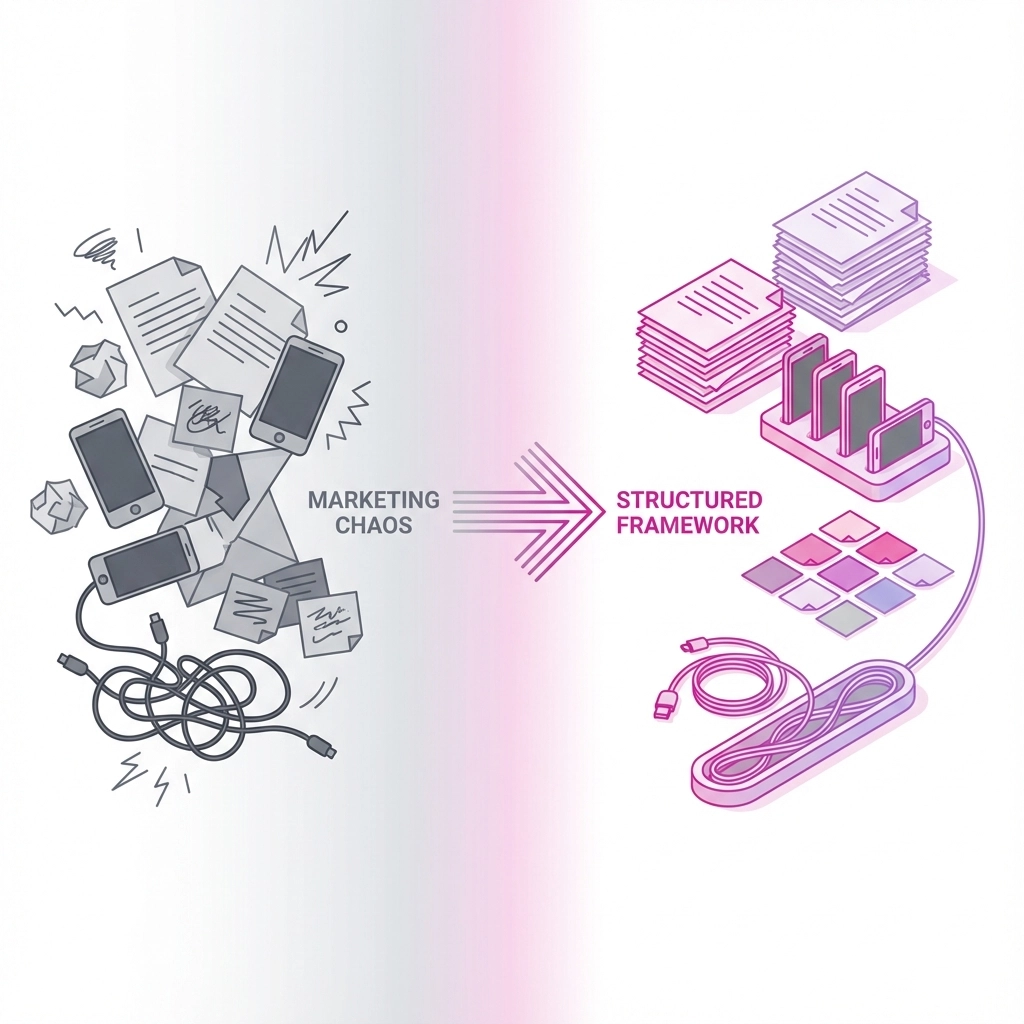
The Core Components Every Framework Needs
Here's what separates successful entrepreneurs from those who struggle with marketing, they focus on five essential elements:
Strategic Foundation: This isn't fluffy mission statement stuff. We're talking about crystal-clear business goals, deep understanding of your ideal customer, and a unique value proposition that makes people choose you over competitors. When you're clear on these basics, every marketing decision becomes easier.
Execution Model: You need documented processes that turn strategies into actual campaigns. Who's doing what? When are deadlines? How do you go from "we should try email marketing" to actually having emails in people's inboxes? The execution model bridges that gap.
Measurement and Feedback: This is where most entrepreneurs drop the ball. You can't improve what you don't measure. Your framework needs specific KPIs, tracking systems, and feedback loops that tell you immediately when something's working (or when it's time to pivot).
Resources and Tools: Stop reinventing the wheel every time you create content. Your framework should include templates, brand guidelines, and any automation tools that streamline your process and keep everything consistent.
Governance and Alignment: Your tone, messaging, and visual identity should be recognizable whether someone finds you on LinkedIn, your website, or through a referral. Consistency builds trust, and trust generates leads.
The Implementation Blueprint (No PhD in Marketing Required)
Let's get tactical. Here's exactly how to build your framework from scratch:
Step 1: Know Your Market Inside and Out
Before you write a single social media post or launch any campaign, you need to understand your landscape. This doesn't mean spending weeks on research, focus on what directly impacts your ability to win customers.
Look at your top three competitors. What are they doing well? Where are they falling short? What do customers consistently complain about in your industry? These gaps become your opportunities.
Use a simple SWOT analysis, strengths, weaknesses, opportunities, threats. It takes 30 minutes and gives you clarity on where you stand and where you can win.
Step 2: Define Your North Star Metric
Here's something most marketing advice gets wrong, they tell you to track everything. That's overwhelming and counterproductive. Instead, identify your North Star Metric: the single core metric that reflects the true value you deliver to customers.
For a service-based business, this might be qualified consultations booked. For an e-commerce company, it could be customer lifetime value. For SaaS, monthly recurring revenue often works best.
This one metric keeps everyone focused. When you're making marketing decisions, you ask: "Will this move our North Star Metric?" If the answer isn't a clear yes, you don't do it.

Step 3: Get Clear on Your People and Your Promise
You can't market to everyone, and trying will drain your budget fast. Instead, get laser-focused on your ideal customer. What keeps them up at night? What would make their day significantly better? How do they prefer to consume information?
Then craft your unique value proposition. This isn't about being clever: it's about being clear. What specific problem do you solve, and why should someone choose you over the competition?
Your UVP should pass the "grandma test": if you can't explain what you do to your grandmother in one sentence, it's too complicated.
Step 4: Choose Your Marketing Mix
The classic 4Ps framework (Product, Price, Place, Promotion) might seem old-school, but it works because it forces you to think strategically about every dimension of how you bring your offering to market.
Product: What exactly are you selling, and how does it solve your customer's problem? Price: What's your pricing strategy, and how does it position you in the market? Place: Where will your customers find and purchase from you? Promotion: How will you get the word out?
This framework prevents you from jumping straight to tactics without thinking through the bigger picture.
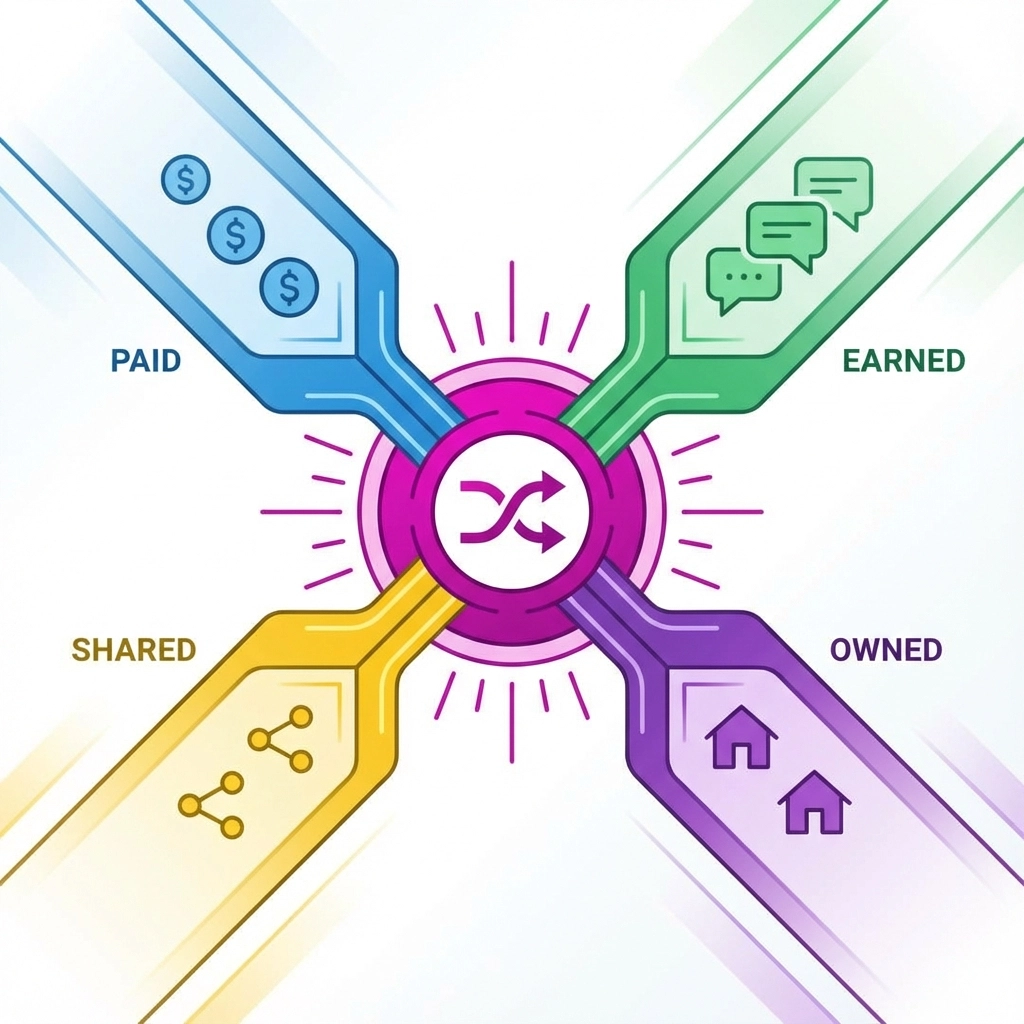
Step 5: Integrate Your Channels Using PESO
Instead of managing your marketing channels in isolation, use the PESO model to create a reinforcing ecosystem:
Paid Media: Your advertising and sponsored content Earned Media: PR, media coverage, word-of-mouth, and customer reviews Shared Media: Social media and user-generated content Owned Media: Your website, email list, and content you control
The magic happens when these work together. Your owned content gives you something valuable to promote through paid channels. Your paid efforts generate earned media and social sharing. Each element strengthens the others instead of competing for attention.
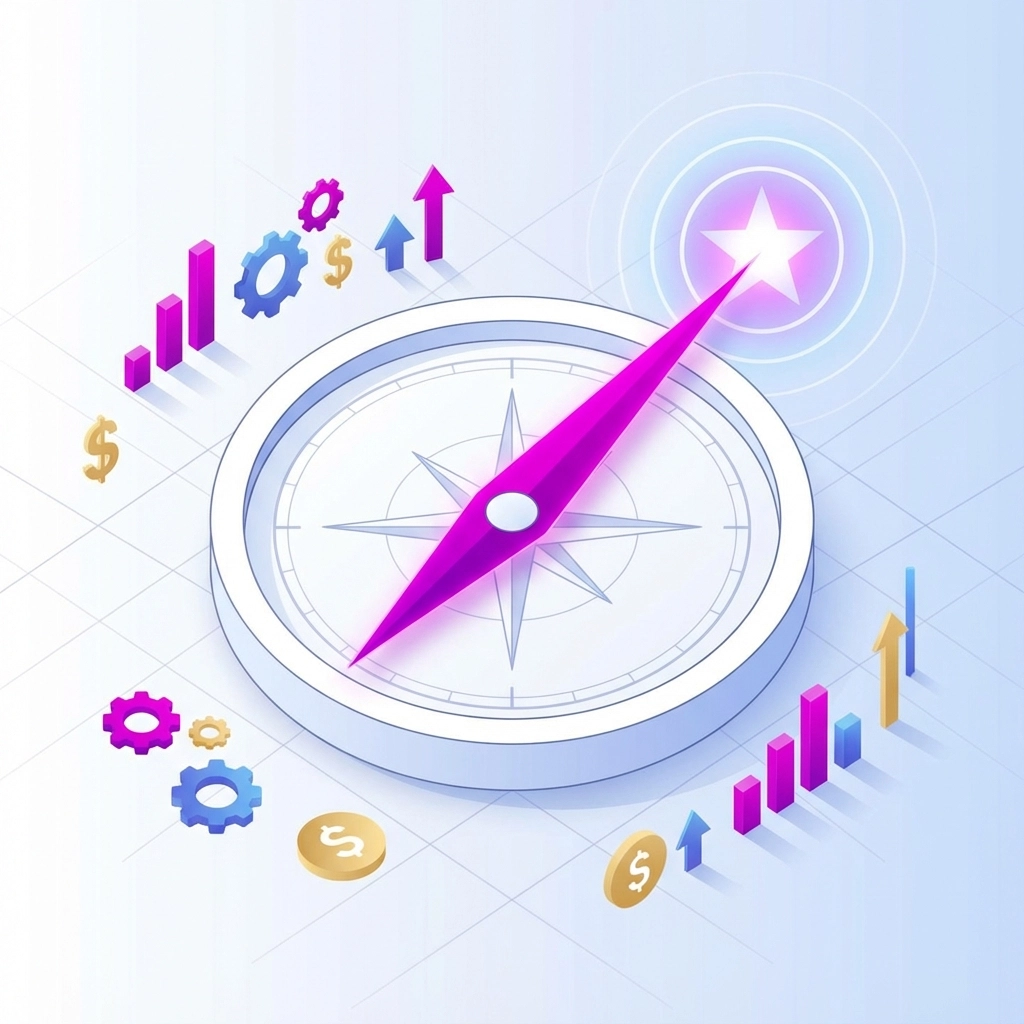
Ground Everything in Data (Not Opinions)
Here's what separates entrepreneurs who scale from those who struggle: successful business owners embrace evidence-based marketing. They test their assumptions, measure results religiously, and optimize based on actual performance data rather than gut feelings or industry trends.
Start simple. Pick three key metrics that matter most to your business. Set up tracking (Google Analytics is free and powerful). Run small tests before committing big budgets. When something works, double down. When something doesn't work, pivot quickly.
The goal isn't to be right all the time: it's to fail fast and cheap while finding what actually drives results.
Your 90-Day Quick-Start Plan
If you're starting from scratch, here's your accelerated timeline:
Week 1: Define your goals, identify your North Star Metric, and nail down your value proposition. Don't overthink this: done is better than perfect.
Week 2: Research your audience and competitors. Build your core messaging framework.
Weeks 3-4: Choose and prioritize your best growth channels based on where your ideal customers actually spend time.
Weeks 5-6: Set up tracking and testing processes. Create your content templates and workflows.
Weeks 7-8: Launch your first campaigns and experiments across chosen channels.
Weeks 9-12: Analyze results, optimize what's working, and eliminate what's not. This becomes your proven playbook moving forward.
The beauty of this framework is that it's not complicated: it's systematic. When you have a clear structure, you move from wondering what to do next to executing with confidence.
You can delegate tasks knowing they'll align with your strategy. You can make decisions quickly because you know what moves your North Star Metric. Most importantly, you can scale what works without wasting time on scattered tactics that don't move the needle.
Remember, the best marketing framework is the one you'll actually use consistently. Start with these fundamentals, measure everything, and adjust based on what your data tells you. Before you know it, you'll have that predictable lead generation system you've been looking for: no guesswork required.
Comments